
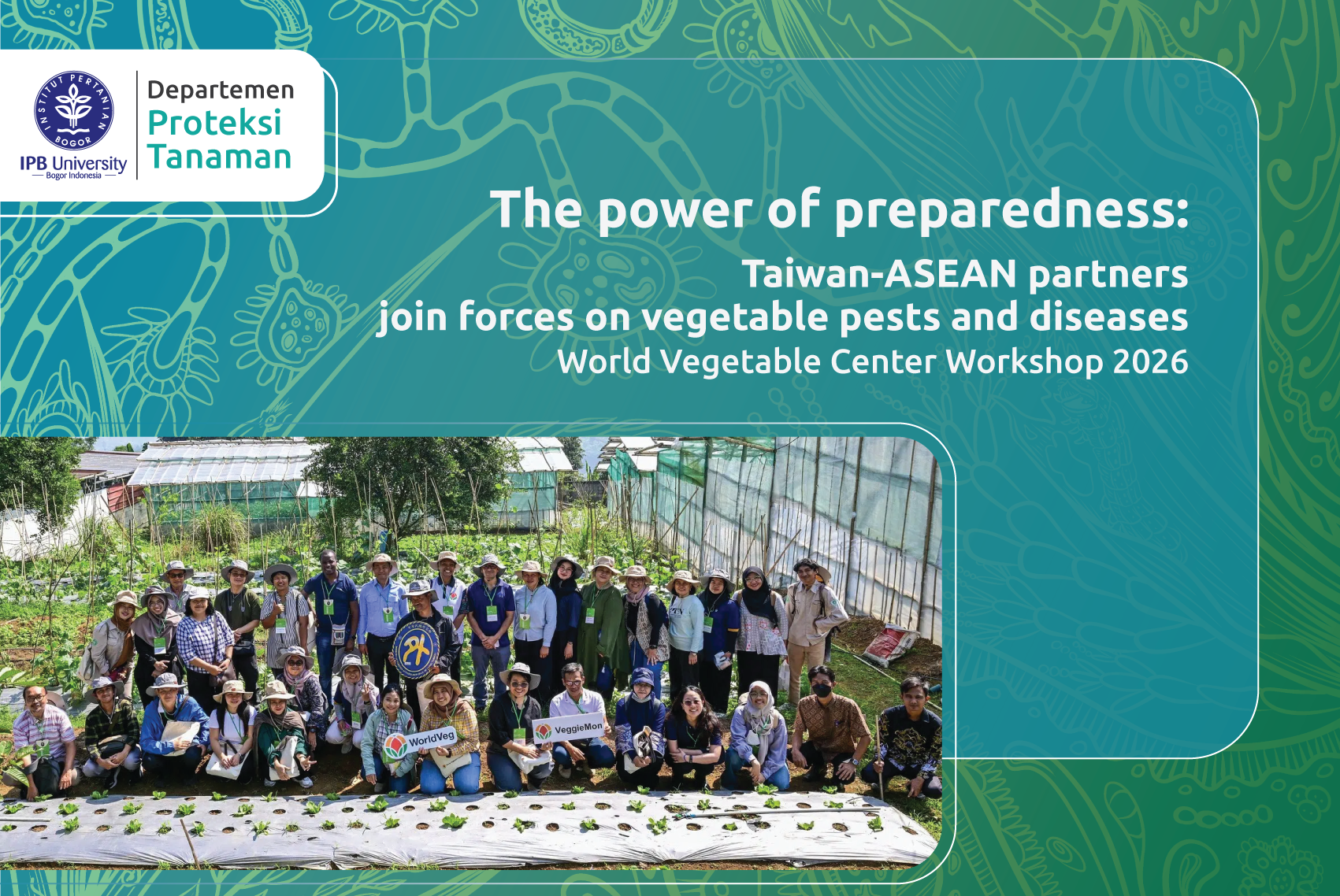
The power of preparedness: Taiwan-ASEAN partners join forces on vegetable pests and diseases
New regional surveillance network aims to strengthen early warning, diagnosis and response to emerging threats across Southeast Asia
Plant health authorities, researchers and technical experts from six Southeast Asian countries and Taiwan have established a new partnership to strengthen regional cooperation in the detection, diagnosis and monitoring of vegetable pests and diseases.
The Taiwan-ASEAN Pest and Disease Surveillance Network was established during a workshop on 18-19th June at the IPB Convention Center in Bogor, Indonesia, organized by the World Vegetable Center (WorldVeg) in partnership with Institut Pertanian Bogor (IPB) University, with funding from Taiwan’s Ministry of Foreign Affairs (MOFA).
It brought together more than 40 representatives from Indonesia, Cambodia, Thailand, the Philippines, Laos, Vietnam and Taiwan, including various Ministries of Agriculture, private sector companies, universities, the Taipei Economic and Trade Office (TETO) in Jakarta, and the Taiwan Technical Mission to the Republic of Indonesia.
A growing regional threat
Vegetable production is essential for food security, incomes and healthy diets in Southeast Asia, but crop losses from invasive pests and diseases is a growing problem. It is exacerbated by the effects of climate change, increasing regional trade, and the cross-border movement of planting material. This is placing pressure on national surveillance systems designed to track their spread and keep the risks at bay.
The Taiwan-ASEAN Pest and Disease Surveillance Network aims to create a regional framework for collaboration on pest and disease surveillance, establishing country focal points and the development of shared communication channels for information exchange and early warning.
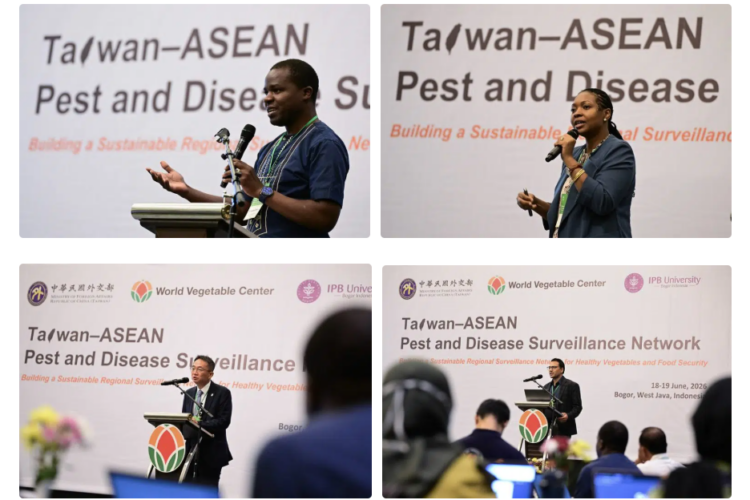
“Plant pests and diseases do not respect national borders,” said project coordinator Dr Lourena Maxwell, Scientist – Plant Pathology at WorldVeg. “Sharing information and building diagnostic capacity across ASEAN countries will help all respond more quickly and effectively to emerging threats.
“Establishing the Taiwan-ASEAN Pest and Disease Surveillance Network is a major step in strengthening our collective preparedness and responses to these threats to vegetable production in the region,” she added.
Echoing the importance of early detection and regional cooperation, Prof Dr Ir Suryo Wiyono, Dean of the Faculty of Agriculture at IPB University, emphasized the value of surveillance in protecting food systems: “As a plant pathologist myself, I understand how critical surveillance is for catching disease threats early. Building this kind of regional collaboration is essential for protecting vegetable production and food security across Southeast Asia.”
Highlighting Taiwan’s commitment to the initiative, Mr Tony SY Hou, Agricultural Attaché at the Taipei Economic and Trade Office in Jakarta, underscored the benefits of sharing expertise and working across borders: “Taiwan is pleased to partner and share our experience in pest and disease surveillance with ASEAN partners.”Collaboration across borders enables us to respond more quickly to emerging threats.”
Sharing data, strengthening diagnostics
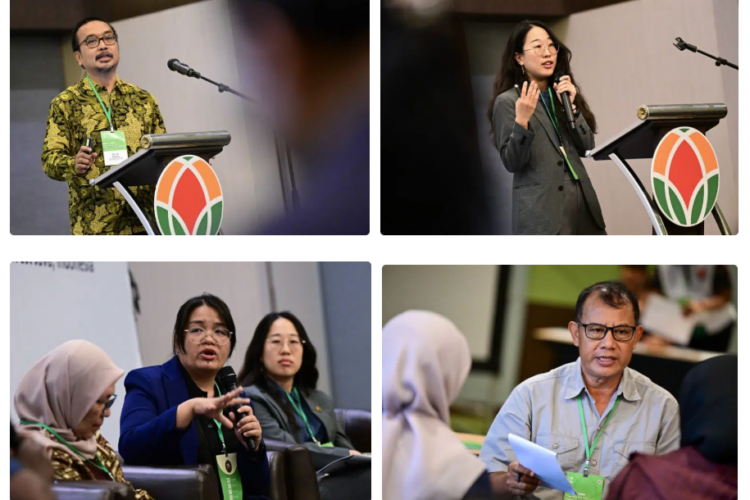
Each participating country (Indonesia, Cambodia, Laos, the Philippines, Thailand and Vietnam) presented an overview of the pests and diseases causing the greatest impact on vegetable production at home, along with current surveillance activities and capacity gaps.
Diseases such as anthracnose, bacterial wilt and bacterial spot, and pests such as tomato leaf miner, thrips and beet armyworm, emerged as shared regional concerns, alongside growing alarm over emerging threats including Tomato Brown Rugose Fruit Virus (ToBRFV), Tuta absoluta, and chilli black thrips (Thrips parvispinus), which have shown a strong capacity for rapid spread and severe economic impact.
These country presentations gave participants a clearer picture of where surveillance systems are strong, where gaps remain, and where cross-border collaboration can make the biggest difference.
Participants were also introduced to VeggieMon, an open-access web platform developed by WorldVeg for vegetable disease monitoring and surveillance. It serves as a decision support system connecting field data, pathogen data and plant protection recommendations. The platform currently contains nearly 10,000 pathogen records covering more than 30 vegetable crops across 77 countries.
Through practical demonstrations and technical sessions, participants explored how the platform can support disease surveillance, diagnostics, decision making and information sharing. VeggieMon provides users with a range of resources, and enables them to upload data on pest and disease outbreaks.
Participants also reviewed existing diagnostic capacities in their countries and discussed criteria for identifying regional hub laboratories that could support disease diagnosis and verification. They also developed preliminary action plans outlining priority crops, surveillance needs and opportunities for collaboration.
Discussions also linked disease monitoring to practical solutions already available to farmers. This included resistant vegetable varieties, integrated pest management strategies, and more targeted use of crop-protection products. Via video link, Dr Emma Jenner, Director of Sustainable Crop Protection at CABI, introduced the CABI BioProtection Portal, a free tool that helps countries identify biological control products that are registered and available locally, making it easier for farmers and national authorities to find and access environmentally friendly alternatives to conventional pesticides.
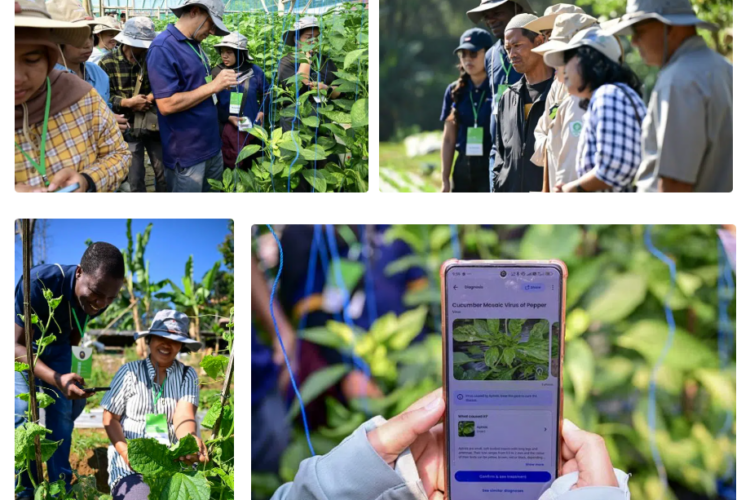
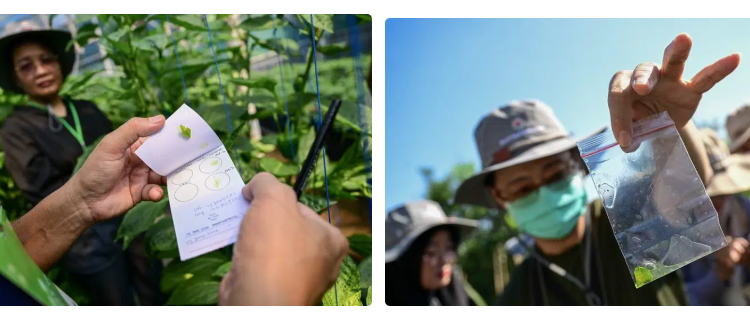
With accurate diagnostics considered the backbone of effective pest and disease surveillance systems, a field visit to Megamendung District, Kabupaten Bogor, gave participants the opportunity to witness the use of sampling and rapid field diagnostic tools to identify diseases of pepper, tomato and cucurbits.
The Taiwan-ASEAN Pest and Disease Surveillance Network is expected to serve as a platform for continued technical cooperation, data sharing and capacity strengthening among participating countries, contributing to more resilient vegetable production systems and improved food security across the ASEAN region.
Participants expressed a strong interest in strengthening regional collaboration beyond the workshop. Key priorities identified included increased exchange of experiences and expertise in plant pest and disease diagnostics, harmonized surveillance approaches and protocols across ASEAN countries, and joint training next year in advanced diagnostics, surveillance methods and emerging technologies.
WorldVeg would like to express its sincere thanks to Prof. Dr. Ir. Elisabeth Sri Hendrastuti (IPB University), who played a key role in supporting the workshop and field visit.
The work is part of the Climate Resilience Action Area of the WorldVeg Global Strategy (2026-2033).